
Arrest Warrants in Morehouse Parish
Louisiana treats an arrest warrant as a judicial order, nothing less. Under CCRP Art. 202, a magistrate may issue one after reviewing a complaint and affidavit showing probable cause, and the same article provides for recall. The writing itself must follow CCRP Art. 203. A peace officer then executes it under Art. 204. In Morehouse Parish, the criminal section of the Fourth Judicial District Court hears district cases at the Bastrop courthouse. That bench covers Ouachita Parish as well.

The court's site lays out the two-parish structure. That split is why the Morehouse Parish clerk serves as the local record office.
Morehouse Parish Warrant Investigations
Investigators at the Morehouse Parish Sheriff's Office build cases. The criminal investigation division identifies offenders, gathers evidence, makes arrests, prepares reports, and hands the file to prosecutors. None of that is a public warrant lookup. It is agency work. Issuing process belongs to a judge or magistrate, who reviews the affidavit, while the clerk records the result. Keeping those two roles straight explains why the sheriff cannot tell a caller whether a judge signed an order.
The division page shows where the investigative work stops and the judicial step begins.
What a Morehouse Parish Arrest Warrant Contains
A Morehouse Parish warrant is short and specific. State law sets its contents. It must name the state, the date and place, the person or a description, the offense, and the command to arrest. The magistrate's signature and title appear on it, and a noncapital warrant may also note bail.
| Case or Warrant Number | Year first, then sequence, for example 2026-CR-00418 |
|---|---|
| Named Subject | The person named or described in the instrument |
| Offense | The charge and its grade as filed |
| Issuing Judge or Court | The authority that signed the order |
| Bail or Bond | Noted only when the warrant specifies it |
| Date Issued | The date on the signature |
Note: A description-only warrant is possible under the statute, so a missing name does not mean the order is invalid.
Summons Is a Limited Morehouse Option
Sometimes a summons replaces an arrest in Morehouse Parish. That option is narrow. CCRP Art. 211.1 lets an officer issue a summons instead of making an arrest in some misdemeanor and traffic-warrant situations. The exceptions include driving while intoxicated, weapons offenses, crimes of violence, child support, and felony warrants.
Key Point: A summons is a narrow alternative, not a promise. Never assume a citation will arrive instead of an arrest warrant.
How Morehouse Parish Arrest Warrants Are Served
A peace officer serves a Morehouse Parish warrant. Louisiana authority rules allow service inside the parish and, in defined circumstances, beyond it. The arrest can happen anywhere. Homes, workplaces, and traffic stops all count. Someone who appears at the courthouse for another matter can be taken there too. Booking and a first appearance before a judge follow, and questions about a case route through the courthouse offices rather than a warrant counter.
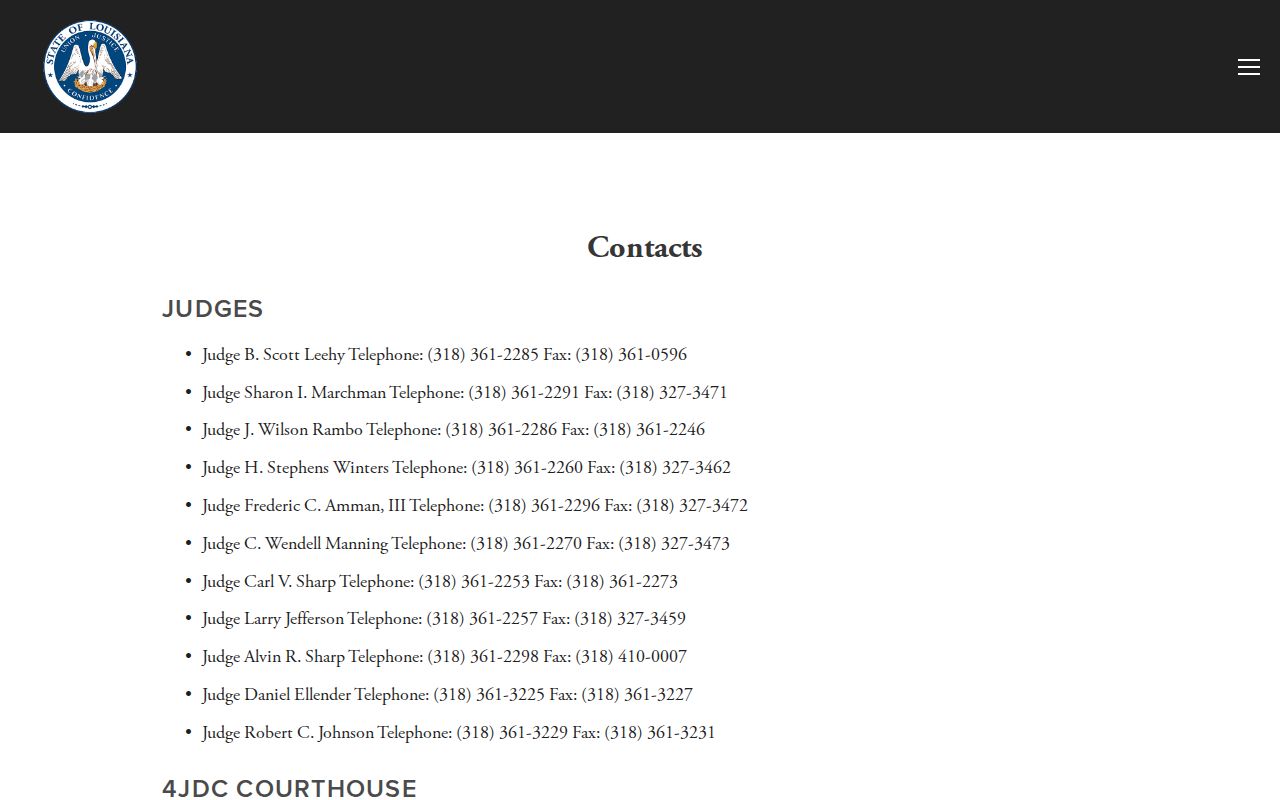
The court contact page lists every office at once. Judge, clerk, district attorney, and sheriff appear together, so a Morehouse Parish warrant question reaches the right desk fast.
Arrest Warrant vs Summons vs Bench Warrant
Three papers, three different responses in Morehouse Parish, and the one named on your notice decides your next move.
| Feature | Arrest Warrant | Summons | Bench Warrant |
|---|---|---|---|
| What It Orders | An arrest | An appearance on your own | An arrest for a missed obligation |
| Basis | Probable cause of an offense | A charge that does not require custody | Failure to appear or comply |
| Who Issues It | A judge or magistrate | A court or authorized officer | The judge on the case |
| How to Respond | Surrender, bond, or counsel | Show up on the date | Recall or appearance |
Morehouse Bail Notation and Waiver Amounts
Bail and waivers are different things. Art. 203 permits a bail amount on a noncapital Morehouse Parish warrant, and that figure belongs to the court. Bastrop City Court separately publishes a waiver list with set amounts for traffic and ordinance categories. The two are not interchangeable. A waiver settles a citation category, bail sets a release condition, and a vendor transaction fee is neither.
Note: Ask the issuing court whether bond is set, where it may be posted, and whether a booking step comes first.
What to Do If There's a Warrant for You
Confirm the case first. Call the Morehouse Parish issuing court, give the case number, and ask what the docket shows. Then work with an attorney on timing, because how a surrender happens matters as much as whether it happens.
- Confirm the warrant and the court that issued it.
- Ask about bail, appearance, and any booking requirement.
- Talk with an attorney about a voluntary surrender or a motion to recall.
- Keep every receipt and order, then confirm the docket update.
Important: Talk with a lawyer before turning yourself in. An active arrest warrant can lead to arrest at any traffic stop or contact with law enforcement.
Until Executed or Recalled in Morehouse
CCRP Art. 205 keeps a warrant live until it is executed or recalled. Age does not retire it. A promise over the phone does not retire it either. That rule answers most of the questions people bring to a Morehouse Parish clerk. No arrest and no recall means the warrant stands. A new district attorney, a new judge, or a moved case does not clear it on its own. Status lives in the record, not in memory. Ask the Morehouse Parish clerk to read the docket entry for the case and to say when it was last updated.
Federal Warrants and Morehouse Parish
A federal arrest warrant leaves the parish workflow entirely. Morehouse Parish sits in the Monroe Division of the Western District of Louisiana, where the federal clerk and PACER hold the docket and the U.S. Marshals Service handles fugitive apprehension. A state clerk cannot confirm a federal order. Out-of-parish warrants split the same way. The issuing court owns the record. The local sheriff may hold only an enforcement hit. Route the question to the originating court before relying on anything else.
- Federal records come from the federal clerk or PACER.
- State records come from the issuing parish court.
- Local law enforcement confirms custody, not the order.